
How to Decline a Job Offer Politely (Email Examples)
Learning how to decline a job offer well matters more than most people think, because the recruiter you turn down today is often the one who calls you in two years. The method for how to decline a job offer is short: decide within the time you were given, decline in writing, thank the people who spent time on you, give one honest reason or none, and leave the door open. This guide covers the timing, the wording, three email examples, and the harder case of declining after you have already accepted.
TL;DR: Decline within the review period you asked for, never later. Do it by email, to the person who made the offer, with a phone call first if you built a relationship. Thank them, state the decision in one sentence, give one honest reason or none, and close warmly. Never disappear, never over-explain, and never use a decline as a negotiating tactic.
Decide fast, then act the same day
Once you know the answer is no, waiting helps nobody. The employer has other candidates waiting on your decision, and every day you hold the offer makes it likelier that their second choice accepts elsewhere. Decline as soon as your decision is firm, and always before the date you promised.
If you are declining because of another offer, make sure that other offer is signed before you send anything. A verbal promise from a second employer is not a reason to release the first.
Decline in writing, and call first if it is personal
Email is the right medium, because it gives the employer a record and gives you control of the wording. If the hiring manager invested real time in you, a short phone call before the email is a courtesy they will remember. Keep it under three minutes: thank them, tell them your decision, say the email is on its way.
Send it to the person who made the offer, copy the recruiter if one was involved, and use the offer thread's subject line.
One honest reason, or none
You do not owe a detailed explanation, and a long one can cause harm. Choose one of two approaches.
- No reason. "After careful thought, I have decided not to accept the offer." This is complete and polite. Most employers will not ask for more.
- One honest reason. "I have accepted a role that is closer to the technical work I want to build on." One sentence, stated as a fact about you, not a judgement about them.
Avoid criticising the manager, the team or the process, listing several reasons, or naming the other employer. If the reason is salary, say so plainly and only if it is true; that is useful information for them and honest from you.
Keep the door open
A good decline ends with a sentence about the future. "I would be glad to stay in touch" is enough. Recruiters keep notes, and a candidate who declined gracefully sits in a very different file from one who vanished.
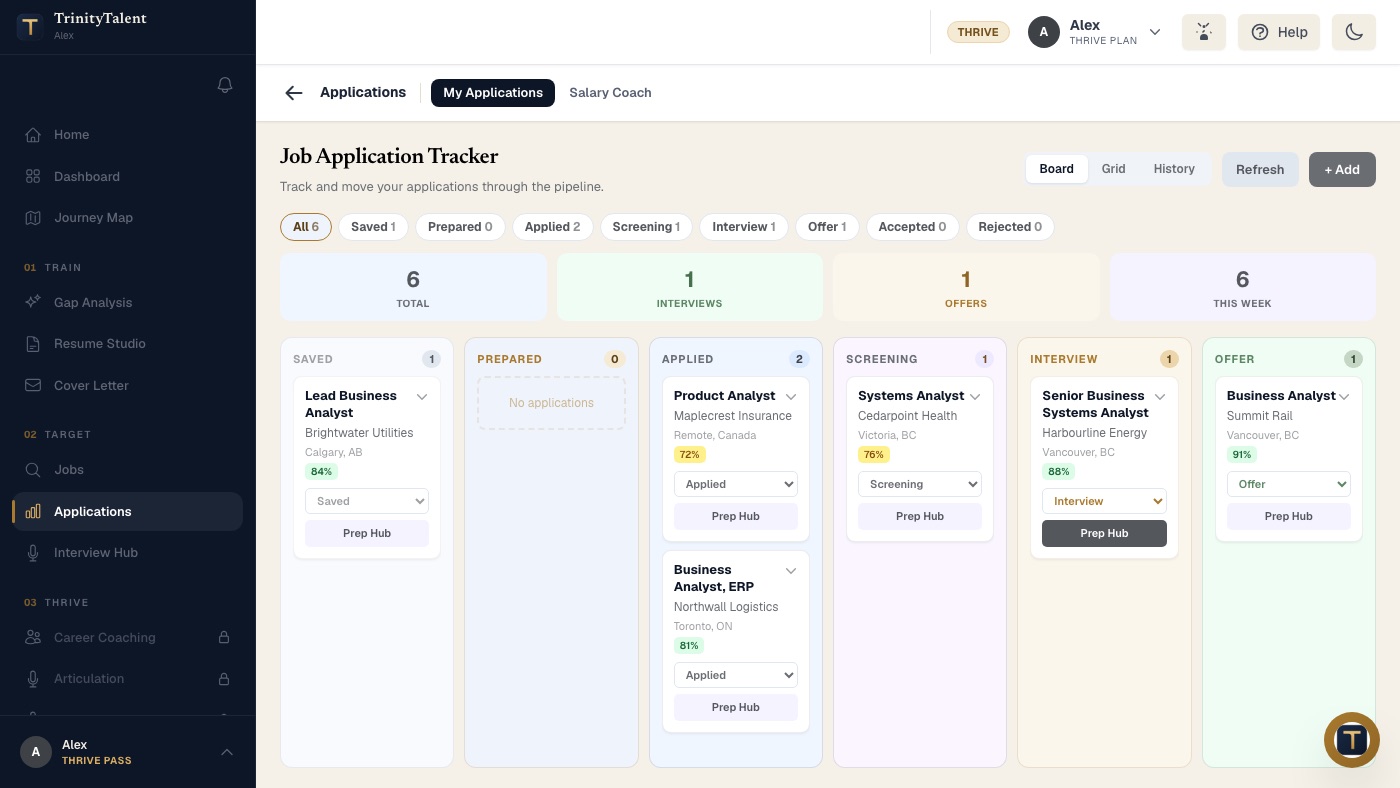
When you send the decline, move the application card to its final column in your tracker and write a two-line note: why you declined and who you spoke to. Your tracker then becomes a record of relationships, not just a list of applications. Our guide on how to evaluate a job offer shows how to reach the decision in the first place.
Three email examples
Adapt the names and details. Each email is under 120 words on purpose.
Example one: declining for another offer
Subject: Re: Offer - Marketing Coordinator
Dear Mr. Leblanc,
Thank you very much for the offer to join Maple Line Software as Marketing Coordinator, and for the time you and the team spent with me over the past three weeks.
After careful thought, I have decided to accept another position that is a closer fit for the direction I want to take. This was not an easy decision, and I have real respect for what your team is building.
I hope our paths cross again, and I would be glad to stay in touch.
Kind regards, Amara Diallo
Example two: declining with no reason given
Subject: Re: Offer - Marketing Coordinator
Dear Mr. Leblanc,
Thank you for the offer and for the care you took throughout the process. After careful consideration, I have decided not to accept the position.
I appreciated learning about the team and wish you every success with the search and the year ahead.
Kind regards, Amara Diallo
Example three: declining because of compensation
Subject: Re: Offer - Marketing Coordinator
Dear Mr. Leblanc,
Thank you for the offer and for the conversations we had about the role. I was genuinely interested in the work.
Having reviewed the full package, I have decided not to accept, as the compensation is below what I need at this stage of my career. I appreciate that you explored options with me.
If the role or the budget changes in future, I would welcome hearing from you.
Kind regards, Amara Diallo
Notice that the third example is honest without being a threat. If you were hoping to reopen negotiation, do that before declining, not with the decline. Our guide on how to respond to a job offer covers the negotiation email.
Declining after you have accepted
Sometimes the right decision arrives late: a better offer, a family change, a warning sign you missed. Backing out of an accepted offer is usually possible before the start date, but it has a cost, so treat it as serious.
- Check your agreement. Some contracts include a notice clause that applies before the start date. Follow it.
- Call first, then email the same day. This is the one case where a call is not optional. The manager may have already turned other candidates away.
- Apologise once, plainly, and do not over-explain. "I am sorry for the disruption this causes" is enough.
- Do not go silent. A no-show on day one closes that company to you permanently and often follows you through the recruiter's network.
Expect the relationship to cool. That is the price, and it is usually still cheaper than starting a job you already know is wrong.
Mistakes that burn the bridge
- Ghosting. Not replying at all is the most common and most damaging error.
- Declining and then asking for more money. The moment to negotiate was before the decline.
- A long list of reasons. It reads as criticism, whatever your intent.
- Bad-mouthing the company afterwards. Industries are small and recruiters move between them.
How TrinityTalent helps
TrinityTalent's application tracker keeps every role you pursued on a card with the posting text, the resume version you sent and your notes, so when you decline an offer you can record why and who you spoke with, and find that context again when the same recruiter or company appears in a future search. The board moves each application through Saved, Applied, Screening, Interview and Offer to a final outcome, so your history of relationships is visible, not lost in an inbox.
For the writing itself, the cover letter tool drafts from your resume and the posting in several tones, and its short, warm, structured style is a useful model for the decline emails above. Nothing is sent without you. Free to build, edit and export your resume. AI tailoring, interview practice and coaching run on prepaid passes, and nothing renews by itself.
Frequently asked questions
How do you politely decline a job offer?
Send a short email to the person who made the offer within the time you were given. Thank them for the offer and their time, state in one sentence that you have decided not to accept, give one honest reason or none, and close by saying you would be glad to stay in touch.
Do I need to give a reason for declining a job offer?
No. "After careful consideration, I have decided not to accept the position" is a complete answer. If you choose to give a reason, give only one, stated as a fact about your own direction or needs rather than a criticism of the employer, and never name the other company.
Can I decline a job offer after accepting it?
Yes, in most cases in Canada, especially before the start date, but check your agreement for a notice clause. Call the hiring manager first, then confirm by email the same day, apologise once plainly, and do not over-explain. Expect the relationship to cool; that is the cost of changing your mind.
Should I decline a job offer by phone or email?
Email is the right medium because it gives both sides a written record. If the hiring manager invested significant time in you, make a short phone call first as a courtesy and then send the email. Never decline by text message or through social media.
Put this into practice
Close the card in your free application tracker with a note on why you declined, so the posting, the people and your reason stay on record for next time.
Write your cover letter