
How to Evaluate a Job Offer Beyond the Salary
If you are wondering how to evaluate a job offer, start by accepting that the salary line is the easiest part and the least likely to decide your happiness a year from now. The right way to evaluate a job offer is to score it on six factors, weight those factors by what matters to you, and compare the result against your current situation or the other offer on the table. This guide gives you the six factors, the Canadian benefits to check, and a simple weighted scorecard you can fill in within an hour.
TL;DR: Score the offer on six factors: total compensation, growth, the manager, location and flexibility, stability, and the work itself. Weight each factor from 1 to 5 by how much it matters to you, score the offer from 1 to 5 on each, and multiply. Compare the total with your current job scored the same way. Check Canadian benefits in detail: vacation weeks, health coverage start date and RRSP match.
Start with total compensation, not base salary
Base salary is one number in a package. Add everything the employer pays for or contributes to, and compare the totals.
- Base salary and how often it is reviewed.
- Bonus or commission: the target amount, how it is calculated, and what percentage of people actually received it last year. Ask.
- RRSP or pension matching: a 4 percent match on base salary is a 4 percent raise that many candidates ignore.
- Health and dental coverage: what is covered, the percentage reimbursed, and when it starts. A three-month waiting period is common and matters if you have ongoing prescriptions.
- Vacation: two weeks is the legal minimum in most provinces; three or four is a meaningful difference in a year.
- Other paid time: sick days, personal days, and whether the office closes between Christmas and New Year.
- Costs the job creates: commuting, parking, equipment, or a home office you pay for.
Example
Daniel has two offers. Northgate Logistics offers a base 6 percent higher than Cedar Ridge Health. Cedar Ridge adds a 5 percent RRSP match, four weeks of vacation instead of two, and health coverage from day one. When Daniel adds the match and values the extra ten days off at his daily rate, Cedar Ridge is ahead by roughly 3 percent, before he considers anything else.
Growth: where does this role lead?
A role that pays well but leads nowhere is expensive in the long run. Ask three questions in the offer stage, when the employer is motivated to answer:
- "What did the last two people in this role move on to?"
- "How are promotions decided, and how often are they reviewed?"
- "What training or certification budget comes with the role?"
Look for specifics. "There is lots of opportunity" is not an answer. "Two of the last three analysts moved to senior analyst within two years" is.
The manager decides most of your experience
People rarely leave companies; they leave managers. You have met this person at least once, maybe twice. Before you accept, review what you learned:
- Did they describe a normal week for the team clearly, or only in slogans?
- Did they ask about your goals, or only about your availability?
- How did they speak about their current team and about people who left?
- How quickly did they answer your follow-up questions?
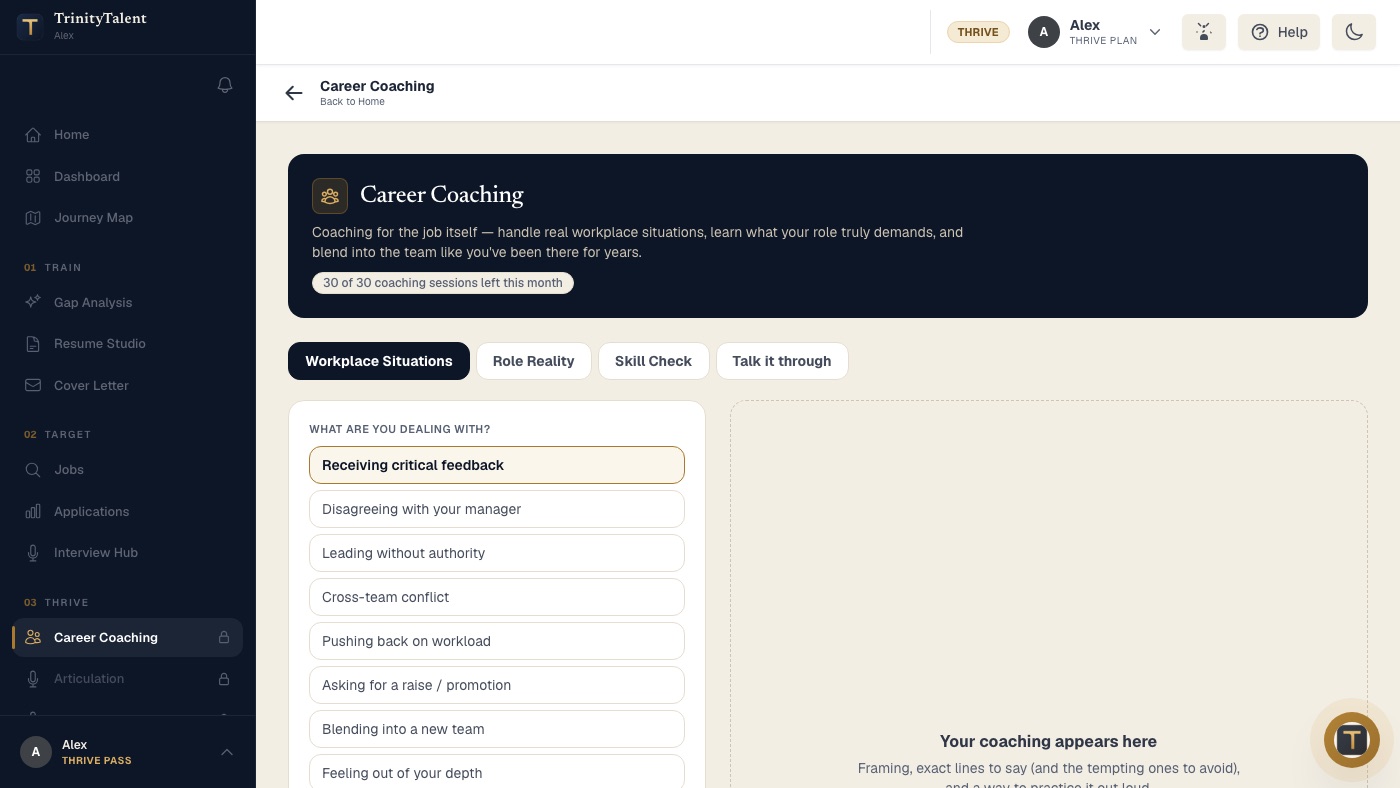
If you can, ask to speak with a current team member for fifteen minutes. A confident manager will agree. Career Coaching's role reality briefings are useful here too: they describe what a role actually demands day to day, so you can compare that picture with what the manager told you.
Location, commute and flexibility
Write down the hours per week the job adds outside work. A 45-minute commute each way is more than seven hours a week, or the equivalent of nearly a full working day. If the role is hybrid, confirm in writing how many days are on site and whether that can change. "Currently three days in the office" means the employer can change it. "Three days in the office, reviewed annually with the employee" is a commitment.
For remote roles, ask which province the employer is registered to employ in, because payroll and employment standards follow the province where you work, not where head office sits.
Stability and the state of the business
You do not need financial statements. You need a few plain signals:
- How long has the team existed, and how long has the manager been in place?
- Why is the role open: growth, a departure, or a restructure?
- Has the company had layoffs in the last two years? A direct question gets a direct answer more often than you expect.
- Is the posting one of many similar postings? Rapid hiring can mean growth or turnover.
A probation period of three months is normal in Canada. Six months is not unusual. Anything longer deserves a question.
The work itself
Finally, the job. Read the offer letter's duties against the posting you applied to. If the title or the duties have changed, ask why. Then ask yourself two questions: on a typical Tuesday, would I want to do this work, and will I be able to describe a result from it in a year? If the answer to the second question is no, the role may be comfortable but it will not build your resume.
The weighted scorecard
Draw a table with six rows, one per factor, and four columns: weight, offer score, current job score, and the two products.
- Weight each factor from 1 to 5. Be honest. If you have a young family, flexibility may be a 5 and growth a 3.
- Score the offer from 1 to 5 on each factor, using the facts you collected, not your mood.
- Score your current job, or the other offer, the same way.
- Multiply and total. A difference of less than 10 percent means the offers are close and you should decide on the manager. A difference above 20 percent is usually real.
Daniel's scorecard gave Cedar Ridge 84 and Northgate 71, mostly on the manager and vacation rows. He accepted Cedar Ridge and negotiated a salary review at six months. Before you sign, read job offer red flags to make sure none of the six factors is hiding a warning sign, and when you are ready to reply, our guide on how to respond to a job offer has the templates.
How TrinityTalent helps
TrinityTalent's Career Coaching includes role reality briefings that describe what a role demands day to day, the situations you will face and what the first 90 days look like, so you can test the picture the manager painted against a grounded description before you accept. The Skill Check generates eight practical questions from the pasted job description, which shows you quickly whether the work matches your strengths or would stretch you in ways the offer letter does not mention.
The application tracker keeps the original posting and the resume version you sent on the card, so you can compare the advertised role with the offered one line by line. The Salary Coach in the Applications area prepares you for the conversation that follows. Free to build, edit and export your resume. AI tailoring, interview practice and coaching run on prepaid passes, and nothing renews by itself.
Frequently asked questions
What should I look at in a job offer besides salary?
Look at total compensation, including bonus, RRSP match, health coverage and vacation, then at growth, the manager, location and flexibility, the stability of the business, and the work itself. Score each from 1 to 5 and weight them by what matters most to you.
How do I compare two job offers?
Score both offers on the same six factors with the same weights, multiply weight by score, and total the result. If the totals are within about 10 percent, the offers are close and the manager should decide it. Be sure to convert benefits like vacation days and RRSP matching into money so the comparison is fair.
What benefits are standard in a Canadian job offer?
Most full-time offers in Canada include extended health and dental coverage, two or more weeks of paid vacation, and statutory holidays. Many include a group RRSP with an employer match, sick days and a probation period of about three months. Always check when coverage starts and what the match percentage is.
Is it acceptable to ask to speak with team members before accepting?
Yes. A fifteen-minute conversation with a future colleague is a reasonable request at the offer stage, and a confident manager will arrange it. Ask about a normal week, how decisions are made and what has changed recently. A refusal is a signal worth weighing in your scorecard.
Put this into practice
Ask Career Coaching for a role reality briefing on the job you were offered, and compare what the role demands day to day against the offer letter.
Practise a mock interview