
How to Ask for a Referral Without Feeling Awkward
Knowing how to ask for a referral is mostly knowing how to make it easy. A referral is a favour with a cost: the person attaches their name to yours inside their company. People say yes when the ask is specific, the materials are ready, and saying no costs nothing. This guide covers who to ask, exactly what to send them, when to ask, how to make no easy, and how to thank them so they would do it again. Learning how to ask for a referral well is worth more than another ten applications.
TL;DR: Ask someone who knows your work or has spoken with you at length, at a company where a posting exists. Send the posting link, a resume tailored to it, and two lines about you they can copy into the referral form. Ask before you apply, give them a way out, and tell them the outcome whatever it is.
Why referrals work and why people hesitate
Many companies move referred candidates to a recruiter's screen ahead of the general pool, because an employee has already vouched for them. That is the value. The hesitation comes from the same place: the referrer is spending credibility. If you are a weak fit, it reflects on them. Your job is to show, quickly, that vouching for you is safe.
The awkwardness most people feel is the fear of imposing. The fix is not confidence. It is preparation. An ask that arrives with everything ready and an easy exit is not an imposition.
Who to ask
In order of strength:
- Someone who has seen your work. A former colleague or manager now at the target company. They can say "I worked with her; she is good."
- Someone you have spoken with at length. A contact from an informational interview who knows your background and said "let me know how it goes".
- A warm acquaintance. A classmate, a former teammate from a volunteer project, a friend of a friend who agreed to be introduced.
- A stranger at the company. Possible, but the yes rate is low and the referral is weak. Only try this when the posting says referrals are welcome and your fit is obvious.
Do not ask someone who cannot honestly say anything about you. A referral that reads "I do not know this person" is worse than none.
What to send them
The whole ask fits in one message with three things attached or linked. A referrer should be able to complete the referral in five minutes without asking you anything.
- The posting link and the job number. Not "the analyst role"; the exact posting. Many referral forms need the number.
- A resume tailored to that posting. The same file you will upload. If your resume says one thing and the referrer says another, the recruiter notices.
- Two lines they can copy. Most referral forms ask "why are you recommending this person?" Write the answer for them, honestly, in the third person, and tell them to change anything.
Example of the two lines, for a fictional candidate: "Marcus ran bi-weekly payroll for 380 staff across two provinces at Northgate Logistics with zero late remittances in four years. He is applying for the Payroll Specialist role and I worked alongside him for two of those years."
The referrer can paste that, edit it or write their own. You have removed the blank-page problem.
The message
Keep it short and put the exit in it.
"Hello Priya, I am applying for the Payroll Specialist role at Harbourview (job 4471, link below). Would you be comfortable referring me? I have attached the resume I will submit and two lines you could use in the form, and please change anything. If it is not a good moment or you would rather not, no problem at all; I will apply through the portal either way."
That message does five things: names the role, asks the question directly, shows the work is done, gives permission to decline, and removes any sense that your application depends on them.
When to ask
Ask before you apply. Many systems link a referral to an application only if the referral comes first; some will not let an employee refer someone already in the pipeline. Check the timing with your contact: "Should I wait to apply until your referral is in?"
Allow a week. Referrers are busy, and forms sit in a queue. If you have heard nothing after five business days, send one gentle note with the closing date and offer to apply directly if it is easier. Then apply regardless. A referral is a help, not a gate.
Make no easy
The line "no problem at all, I will apply either way" is not politeness. It is what makes a yes possible. People decline referrals for reasons that have nothing to do with you: a hiring freeze they cannot mention, a policy against referring people they have not worked with, a manager they do not want to owe. If declining feels costly, they go silent instead, and silence is worse for both of you.
If someone declines, thank them and ask one thing: "Is there anything about the role I should know before I apply?" Often the honest answer to that is more valuable than the referral.
Thank them properly, twice
The first thank-you is immediate: a short message when they confirm the referral is in. The second is the one people forget. Tell them the outcome, whatever it is. "I had the screen on Tuesday and a second interview next week" or "They went with an internal candidate, but thank you for putting me forward." A referrer who never hears back does not refer twice.
If you are hired, thank them again in person and remember that referral bonuses exist at many companies; make sure they get credit by naming them in your application where the form asks.
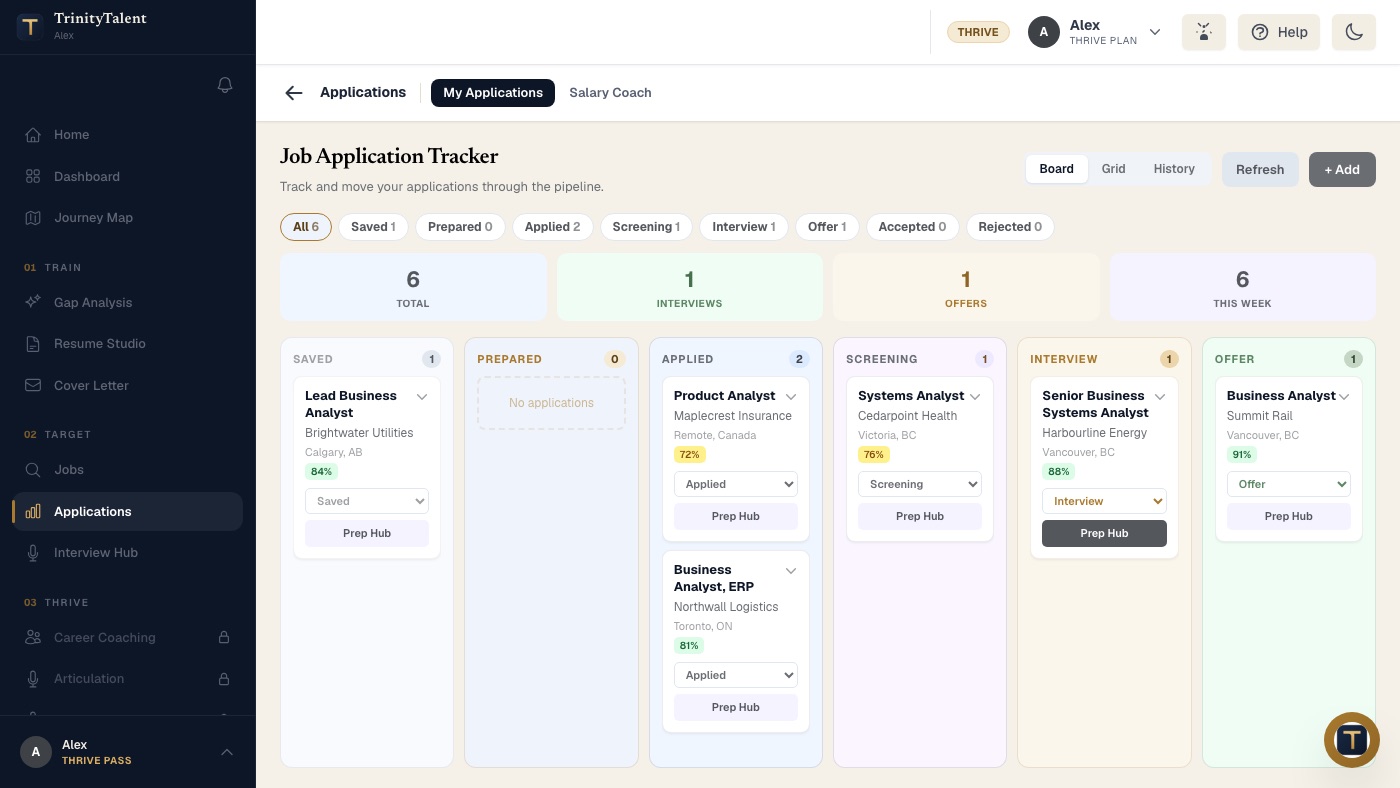
Keep a record. On the application card, note who referred you, the date, and the date you told them the outcome. Referrals and recruiter messages are part of the same application story, and the tracker is where that story lives.
How TrinityTalent helps
The hardest part of a referral request is having the tailored resume ready before you ask. TrinityTalent's resume builder tailors your resume to the real posting in one pass, from your own facts, so the file you send your referrer is the file you submit. The Application tracker keeps that version, the posting text and your contact notes on one card, which means the referrer, the recruiter and you are all reading the same document, and you know exactly when to follow up.
If you are writing the two lines and cannot see your own strengths, the cover letter tool drafts evidence sentences from your resume against the posting; you can adapt those into the referrer's copy. Nothing is ever sent or submitted for you. Building, editing and exporting your resume on TrinityTalent is free.
Frequently asked questions
How do you politely ask for a referral?
Name the exact posting, ask the question directly, attach the resume you will submit and two lines the person can copy into the referral form, and give them an easy way out: "If it is not a good moment, no problem at all; I will apply either way." Short, specific and prepared is what politeness looks like here.
Should you ask for a referral before or after applying?
Before, in most cases. Many applicant tracking systems link a referral to an application only when the referral is submitted first, and some will not accept a referral for someone already in the pipeline. Ask your contact whether you should wait, and apply directly after five business days if you hear nothing.
What should you send someone when asking for a referral?
Three things: the posting link with its job number, a resume tailored to that posting (the same file you will upload), and two honest lines in the third person about why you fit, which they can paste into the referral form or rewrite. The referrer should be able to finish in five minutes.
Is it acceptable to ask a stranger for a referral?
It is possible but weak. A referral from someone who cannot say anything about your work carries little weight and has a low yes rate. Prefer former colleagues, people you have had a real conversation with, or a warm introduction. If you do ask a stranger, make the fit obvious and the exit easy.
Put this into practice
Tailor your resume to the posting in one pass, then save the version you send to the referrer on the application card so you both work from the same file.
Write your cover letter