
Canadian Workplace Culture: What Newcomers Should Know
Canadian workplace culture is often described as polite, informal and indirect, and all three descriptions are true in ways that surprise newcomers. If you are trying to understand Canadian workplace culture before or during your first job here, the most useful thing to know is that the rules are rarely stated. Feedback arrives softened, managers are called by their first names, and "we should grab coffee sometime" may or may not be an invitation. This guide explains the norms that trip people up most, with scripts for the first weeks.
TL;DR: Expect feedback to be softened, so listen for the request inside the compliment. Use first names, including for senior people. Arrive on time for everything. Take part in short small talk; it is how trust is built. In meetings, contribute early and briefly. Ask for help in the first month, when it is expected. Working hours are real boundaries, and respecting others' is part of the culture.
Feedback is indirect: listen for the request
In many Canadian workplaces, critical feedback is wrapped in softening language. "This is a good start, and it might be worth tightening the second section" often means "the second section needs rewriting". "You might want to loop in Dana" usually means "you should have involved Dana already". Newcomers from more direct cultures sometimes hear only the compliment.
The fix is a clarifying question that makes the request explicit without making the other person uncomfortable. Say this: "Thanks. To make sure I get it right, would you like me to restructure the second section, or just shorten it?" Avoid this: "So is it good or not?" It puts the person on the spot and reads as combative.
The same softening applies when you give feedback. "This is wrong" lands harder here than in many places; "I think there may be an issue with the totals on page two, can we look at it together?" gets the same result. The guide on how to take feedback at work covers the receiving side.
First names and flat hierarchy, with limits
Most Canadian workplaces use first names for everyone, including the CEO. "Sir" or "Madam" sound out of place, and "Mr. Patel" for your manager will usually get a gentle "please, just Raj". Use first names from the first day unless told otherwise.
Do not mistake informality for the absence of hierarchy. Decisions still flow through managers, and going around yours without telling them is noticed. The rule is informal in tone, formal in process: say "Raj" and still copy Raj on the email to his director.
Punctuality is a form of respect
Arriving on time means arriving a few minutes early. A meeting that starts at 10:00 begins at 10:00, and joining at 10:07 without a message reads as disrespect for everyone's time, even if nobody says so. The same applies to deadlines: an agreed date is expected to be met, and if it cannot be, say so as soon as you know, not on the day.
If you will be late, send a short message first: "Running five minutes behind, start without me."
Small talk is not wasted time
Newcomers often see the two minutes of weather and weekend talk at the start of a meeting as filler. In Canadian workplaces it is how colleagues signal that they see each other as people, and skipping it can read as cold. You do not need to be good at it, only to take part briefly.
Safe topics: weather, weekend plans, sports, food, commutes, holidays. Avoid until you know someone well: salary, religion, politics, health, and questions about family status. Say this: "How was your weekend?" then listen and ask one follow-up. Avoid this: launching straight into the agenda while others are still greeting each other.
"We should grab coffee sometime" is usually goodwill rather than a plan. To make it a plan, propose a time: "I would like that. Does Thursday at 2 work?"
Meetings and email
In meetings, participation is expected from everyone, not only the most senior person, and silence can be read as disengagement rather than respect. Prepare one point and make it early; the guide on how to speak up in meetings covers the method. Disagreement is welcome when it is framed as a question or an alternative: "Have we considered doing it in two phases?" rather than "That will not work".
Email is short, polite and direct about the request: a greeting by first name, one or two lines of context, a clear ask, and a thank you. "Hi Meera, quick question on the vendor file. Could you confirm the approval date by Wednesday? Thanks, Tariq." Long formal openings are unusual, and no greeting at all seems careless. Reply within one business day, even if only to say when you will have an answer.
Asking for help is expected, especially early
In some cultures asking for help signals weakness. In Canadian workplaces it signals engagement, particularly in the first months. Managers generally prefer a question on Tuesday to a wrong deliverable on Friday. Frame the question with what you already tried.
Say this: "I have read the process document and I am not sure which template applies to provincial clients. Which one should I use?" Avoid this: waiting until the deadline, then explaining that you were not sure.
Consider Amadou, an engineer who joined a Vancouver firm after ten years in a workplace where questions went through a supervisor. He spent three weeks working out the drawing standards alone and delivered work that had to be redone. His manager's feedback, softened as usual, was "next time, come find me sooner". He did, and the redo rate dropped to zero.
Boundaries and working hours
Working hours are usually respected in both directions. Late-night messages are often read as poor planning rather than dedication, and colleagues are not expected to reply outside their hours. Vacation is expected to be taken. Sick days are used when you are sick, and coming in ill is not seen as commitment.
Your own boundaries are legitimate too. "I finish at 5 on Tuesdays for a family commitment" is a normal sentence, and stating it early is easier than explaining it later. Respecting others' boundaries, such as not scheduling meetings at lunch or after hours, is part of being a good colleague.
How TrinityTalent helps
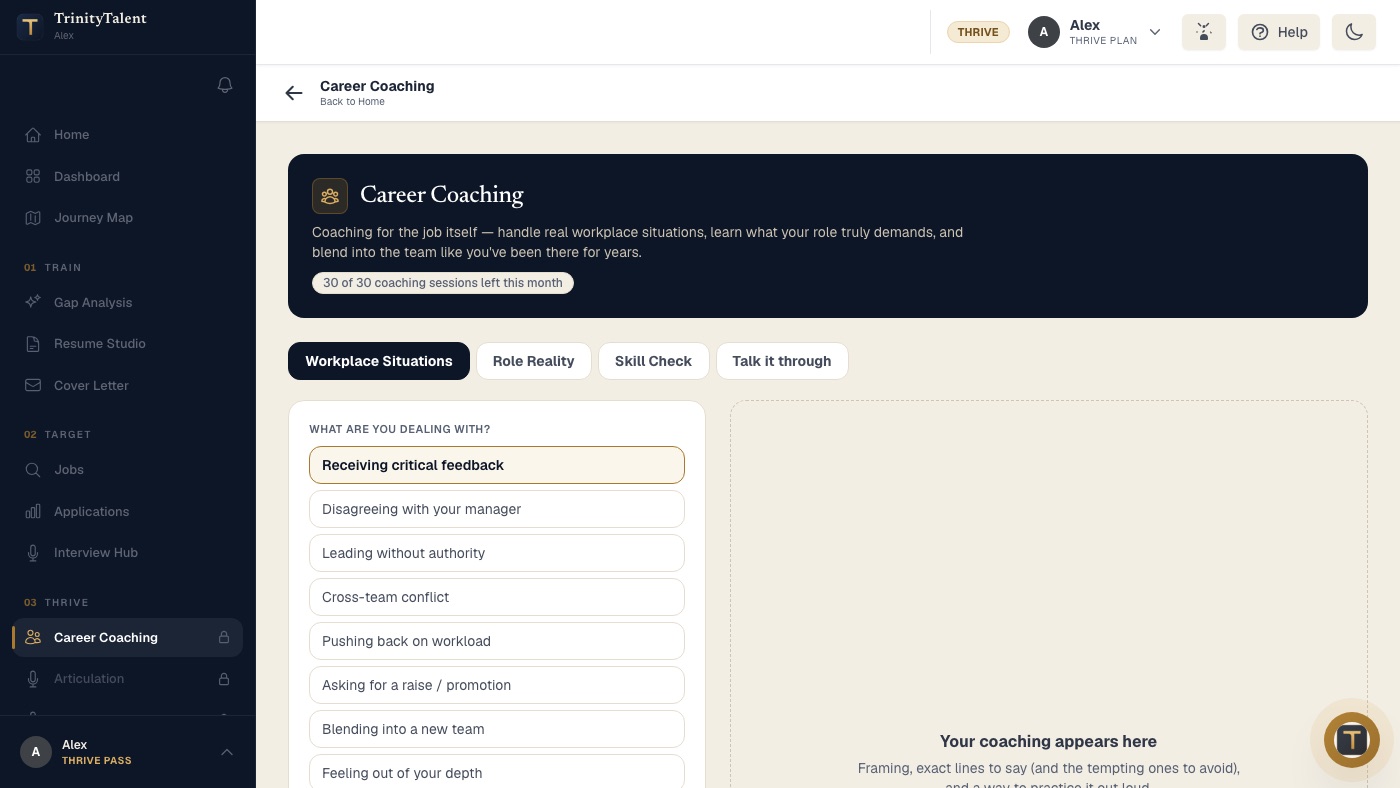
TrinityTalent is built in British Columbia, and its Career Coaching includes Canadian workplace-norms coaching for newcomers. Choose a situation such as "Blending into a new team", "Receiving critical feedback" or "Disagreeing with your manager", add a sentence about your role and what happened, and the coach gives you framing plus the exact lines to say and the tempting ones to avoid. Role Reality briefings describe what a role actually demands day to day, and the first-90-days plan sets out what to do in the early weeks.
Voice Studio measures pace, pauses and filler words from a recording that stays on your device, with an ESL Clarity Mode that coaches clarity and pace, never accent. The resume builder uses Canadian format by default, and the newcomer's guide to the Canadian job market covers the search itself. Building, editing and exporting your resume on TrinityTalent is free.
Frequently asked questions
What is Canadian workplace culture like?
It is usually informal in tone and formal in process. People use first names at every level, feedback is softened and indirect, punctuality is treated as respect, and short small talk is part of how trust is built. Participation in meetings is expected from everyone, and working hours and vacation are respected in both directions.
How do Canadians give feedback at work?
Indirectly, and often wrapped in a compliment. "This is a good start, and the second section could be tighter" usually means the second section needs work. Listen for the request inside the softened sentence and ask a clarifying question, such as whether they want it restructured or shortened, rather than asking whether it was good.
Is it rude to call my manager by their first name in Canada?
No. First names are standard in most Canadian workplaces, including for senior leaders, and using a title can make people uncomfortable. Use first names from the first day unless someone tells you otherwise. Informality in address does not remove the hierarchy, so decisions still go through your manager.
Should I take part in small talk at work in Canada?
Yes, briefly. Two minutes of weather, weekend or commute talk at the start of a meeting or in the kitchen is how colleagues signal that they see each other as people. You do not need to be skilled at it. Ask one question, listen, and ask one follow-up. Avoid salary, religion, politics and personal family questions until you know someone well.
Put this into practice
Pick "Blending into a new team" in Career Coaching, add your situation, and get Canadian workplace-norms coaching with exact lines to say and to avoid.
Build a Canadian resume