
What to Do After a Job Rejection: A 5-Step Recovery
A job rejection feels like a verdict on you. It is not. A job rejection is a single data point about one role, one panel and one week, and the useful response is the same five steps every time: reply graciously, ask for feedback once, log the stage you reached, look for the pattern across several rejections, and change one thing before the next application. This guide walks through each step with the exact emails to send and the questions to ask yourself, so the next rejection costs you an afternoon instead of a fortnight.
TL;DR: Reply to every rejection within a day with thanks and a door left open. Ask for feedback once, in one specific question. Record the stage you reached in your tracker. After three or more rejections, look at where you are being stopped, because the stage tells you what to fix. Then adjust one thing, not everything, and apply again within the week.
Step one: reply graciously within a day
Most candidates never reply to a rejection email. That makes a two-sentence reply memorable. It also keeps you in the recruiter's mind for the next opening, which is often how second chances happen. Roles fall through, first-choice candidates decline, and the recruiter goes back to the people who were pleasant to deal with.
Subject: Re: Your application - Operations Analyst
Dear Ms. Tremblay,
Thank you for letting me know, and for the time you and the team spent with me. I enjoyed learning about the work and remain interested in Cedar Ridge Health, so please keep me in mind if a similar role opens.
Kind regards, Jonas Petrov
No arguing, no asking them to reconsider, no sadness. Warm, short, forward-looking.
Step two: ask for feedback once, and ask a small question
Feedback after a rejection is rare, partly because employers worry about legal exposure and partly because "any feedback?" is a hard question to answer. Improve your odds by asking one narrow question, one time, in the same reply or a day later.
If you are able to share it, was there one area where the successful candidate was stronger? It would help me focus my preparation.
Roughly one recruiter in several will answer. When they do, thank them and do not debate the answer, even if you disagree. When they do not, let it go. Asking twice turns a good impression into a poor one.
Step three: log the stage you reached
This is the step most people skip, and it is the one that turns rejections into information. For every application, record how far you got:
- Applied, no response. The resume did not pass the screen.
- Phone screen, then rejected. The resume worked; the first conversation did not.
- First interview, then rejected. You can talk about your work but did not persuade a hiring manager.
- Final round, then rejected. You were close; fit, judgement or a stronger competitor decided it.
- Offer declined by you. Not a rejection at all, and worth recording separately.
Write the stage on the application's card the day you hear. Add the date and the one line of feedback if you received any.
Step four: find the pattern across rejections
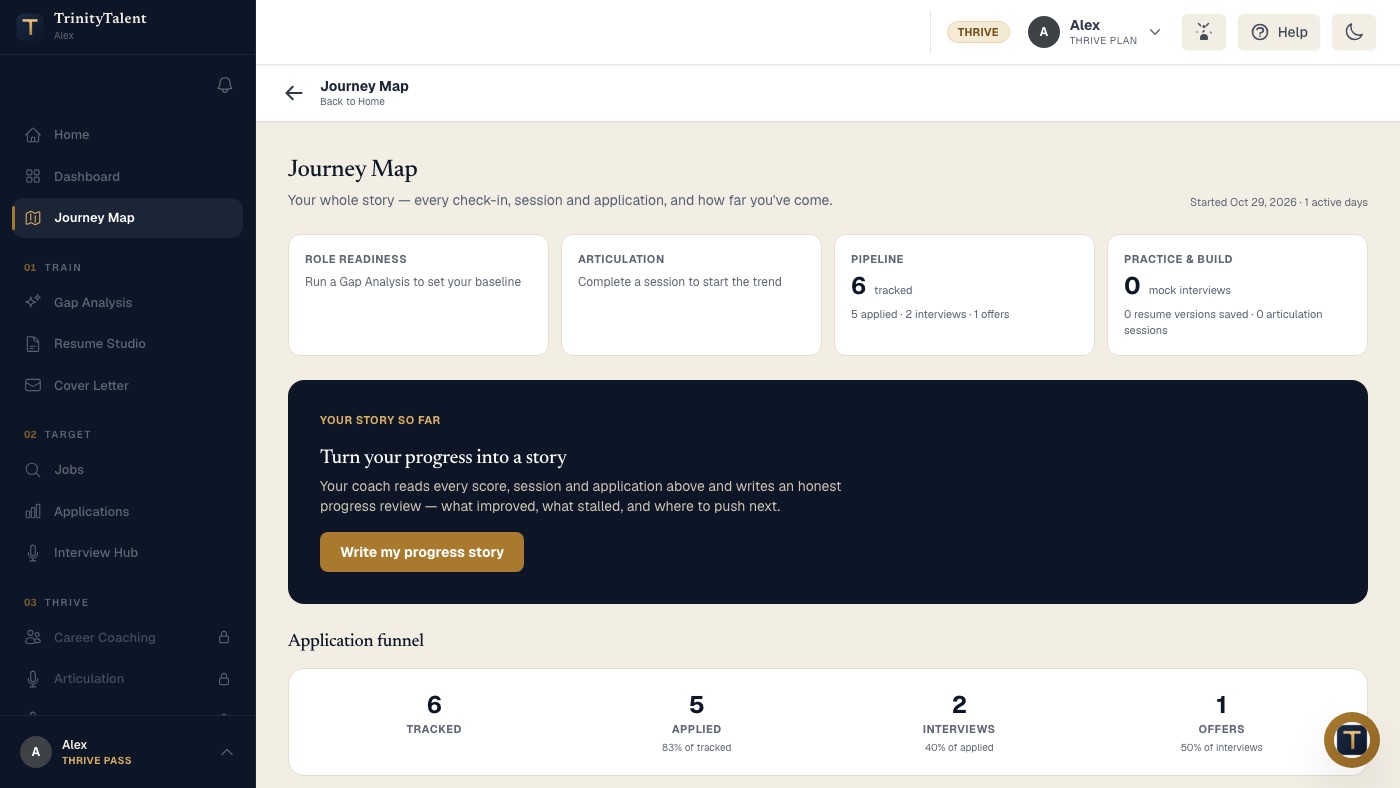
One rejection is noise. Three or more start to form a shape, and the shape tells you what to work on. Look at your tracker or your Journey Map and ask where most applications stop.
If most stop at "applied"
Your resume is not passing the screen. Check that each application used a version tailored to the posting, that the top third of the page names the role and the key skills in the posting's words, and that the file is a single-column layout a parser can read. This is the easiest stage to fix and the most common one to be stuck at.
If most stop after the phone screen
The resume promises something the conversation does not deliver. Often the "tell me about yourself" answer is too long, or the salary expectation is far from the range. Practise a 60-second opening out loud and research the pay range before every screen.
If most stop after a first interview
You describe your work but not its results. Rebuild your stories around decisions and outcomes, with a number in each. Record yourself answering the six most common behavioural questions and listen for the moment the answer loses shape.
If most stop at the final round
You are a good candidate and lost to a better fit or a stronger competitor. This is the stage where the least is wrong. Work on the questions you ask, your understanding of the team, and a clear closing statement about why you want this role.
Step five: adjust one thing, then apply again this week
Change one variable per round of applications, so you can tell whether it worked. If you rewrite the resume, redo your interview stories and change your target roles all at once, you will never know which change mattered.
Then apply again within the week. Momentum is the real cure for a job rejection, and a fixed weekly rhythm keeps rejections from becoming pauses. Our job search schedule sets out a week that leaves room for both applying and improving.
What a rejection is not
It is not a comment on your worth, your intelligence or your future. Hiring is a match between one role and one person at one time, judged by people with limited information and other candidates in front of them. Many rejections happen for reasons that have nothing to do with you: an internal candidate, a frozen budget, a manager who changed the requirements after posting.
If a rejection lands after a layoff, the weight is heavier. Our layoff comeback plan covers the first thirty days, when a rejection can feel like proof of something it does not prove.
How TrinityTalent helps
TrinityTalent's Journey Map records your whole search in one place: readiness scores over time, practice sessions, and the application pipeline with how many applications reached each stage. That funnel view answers step four for you, because it shows at a glance where applications stop most often. The application tracker holds each role's posting text, the resume version you sent and your notes, so logging the stage you reached and the feedback you received is a two-line edit on the card.
When the pattern points at interviews, the Interview Hub offers more than 700 Fire Round questions to warm up on, spoken practice with coaching, and a full mock interview with a live spoken interviewer. When it points at delivery, Voice Studio measures pace, pauses and filler words from a recording that stays on your device. Free to build, edit and export your resume. AI tailoring, interview practice and coaching run on prepaid passes, and nothing renews by itself.
Frequently asked questions
Should I reply to a job rejection email?
Yes, within a day. Thank the recruiter for their time, say you remain interested in the company, and ask them to keep you in mind for similar roles. Most candidates never reply, so a short, warm response is memorable and is often how second chances happen when a first-choice candidate declines.
How do I ask for feedback after a job rejection?
Ask once, with one specific question, such as whether there was one area where the successful candidate was stronger. A narrow question is easier to answer than a general request for feedback. If they answer, thank them and do not argue. If they do not, let it go rather than asking again.
How many job rejections are normal?
Many. Even strong candidates are rejected from most roles they apply to, because each hire is one person chosen from many. What matters is not the count but the stage where you are stopped. Track it, and after three or more rejections look for the pattern and fix that one stage.
How do I stay motivated after being rejected from a job?
Treat each rejection as a data point, log it the same day, and apply to the next role within the week. A fixed weekly schedule keeps rejections from becoming pauses. Change one thing between rounds so you can see progress, and keep a record of what has improved over time.
Put this into practice
Open your Journey Map to see which stage your applications reach most often, then practise that stage with a spoken mock interview.
Practise a mock interview